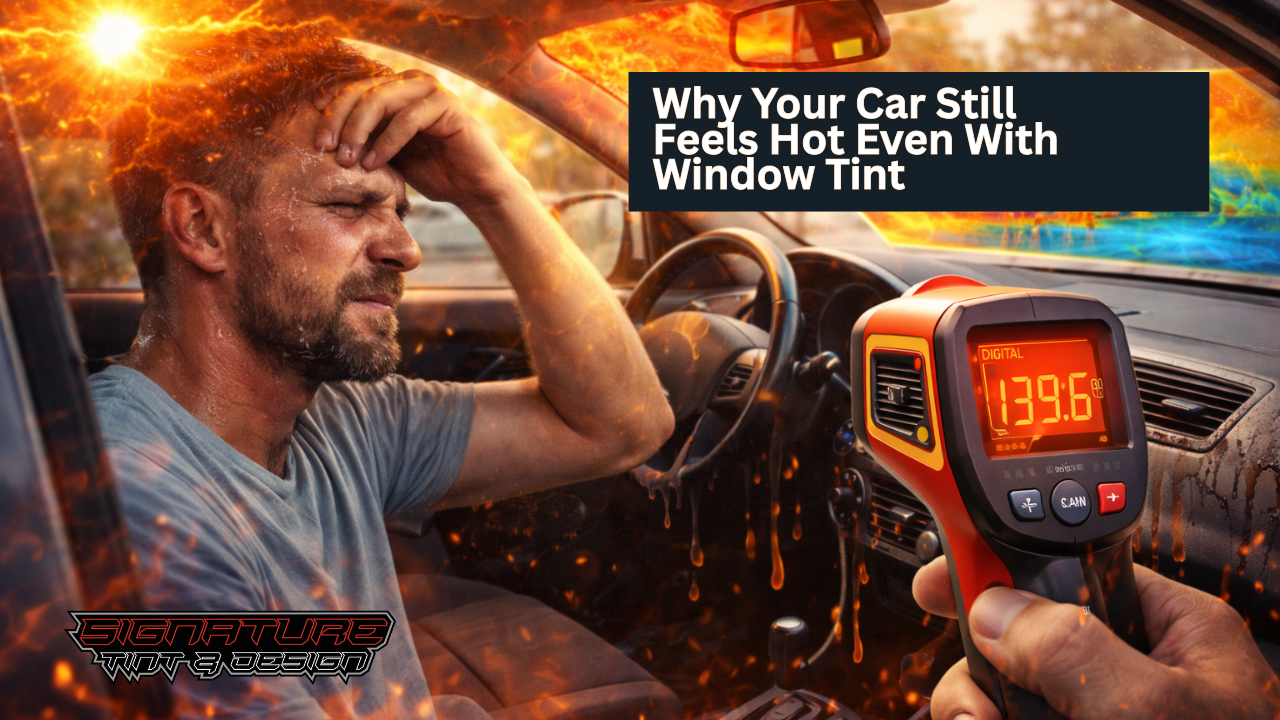
One of the most common questions drivers ask after tinting their windows is simple and frustrating:
“Why does my car still feel hot?”
Window tint is often misunderstood. Many people expect it to work like an on-off switch for heat, but the reality is more nuanced. Tint plays an important role in comfort and protection, but it does not eliminate heat entirely. Understanding how window tint actually works helps set realistic expectations and explains why some vehicles still feel warm even after installation.
1. Heat, UV, and Glare Are Not the Same Thing
A major source of confusion is assuming all sunlight behaves the same way. In reality, solar energy entering your car is made up of three different components:
- UV radiation, which damages skin and interiors
• Infrared heat, which raises cabin temperature
• Visible light, which causes glare and brightness
Most quality window films block up to 99 percent of UV rays. This protects your dashboard, seats, and skin, but UV is not the primary source of heat. Infrared radiation is what makes your cabin feel hot.
The U.S. Department of Energy explains that untreated glass allows significant solar heat gain even when UV protection is present.
If your tint primarily blocks UV but has limited infrared rejection, the interior can still warm up.
2. Not All Window Tint Is Designed for Heat Rejection
 Another reason your car may still feel hot is the type of film used. Dyed and entry-level films reduce glare and darken windows, but they are less effective at blocking infrared heat.
Ceramic and advanced carbon films are engineered to reflect or absorb infrared energy without relying on darkness alone. This is why two cars with equally dark windows can feel very different inside.
According to the International Window Film Association, infrared rejection is one of the biggest performance differences between tint types.
3. Windshield Coverage Matters More Than Most People Realize
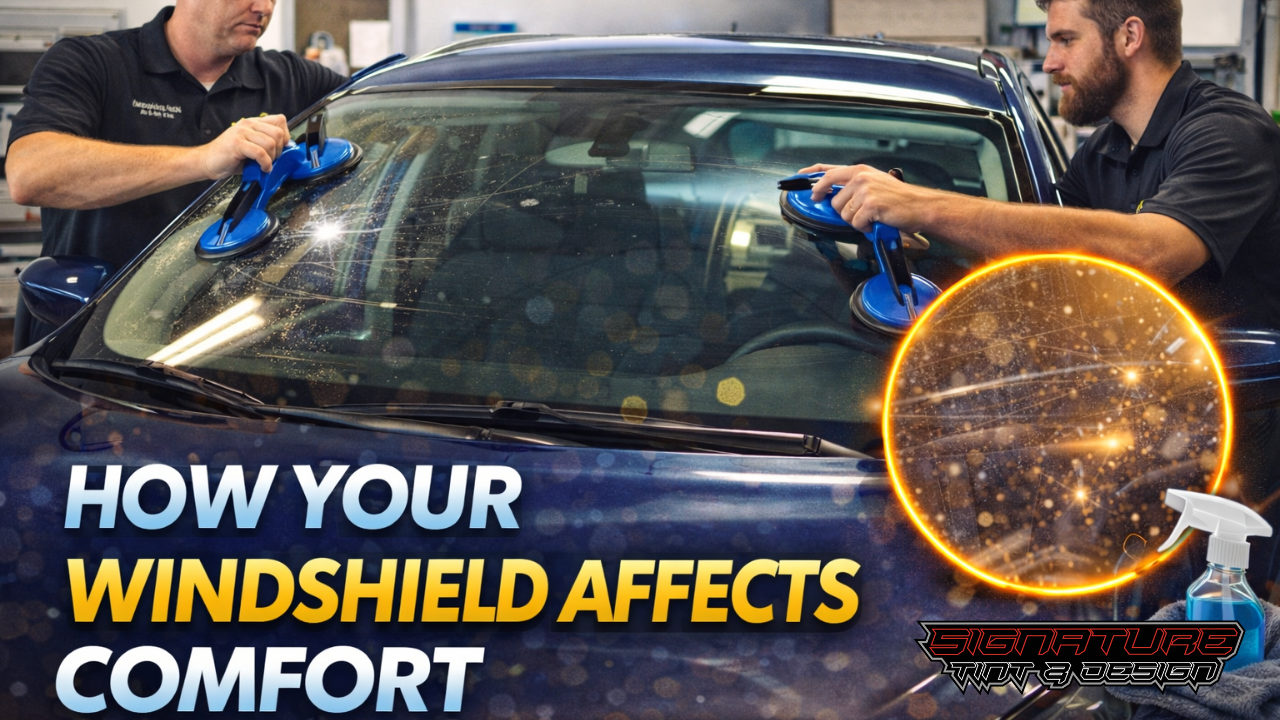
Many drivers tint only their side and rear windows. But the windshield is the largest piece of glass on your vehicle and the main entry point for heat.
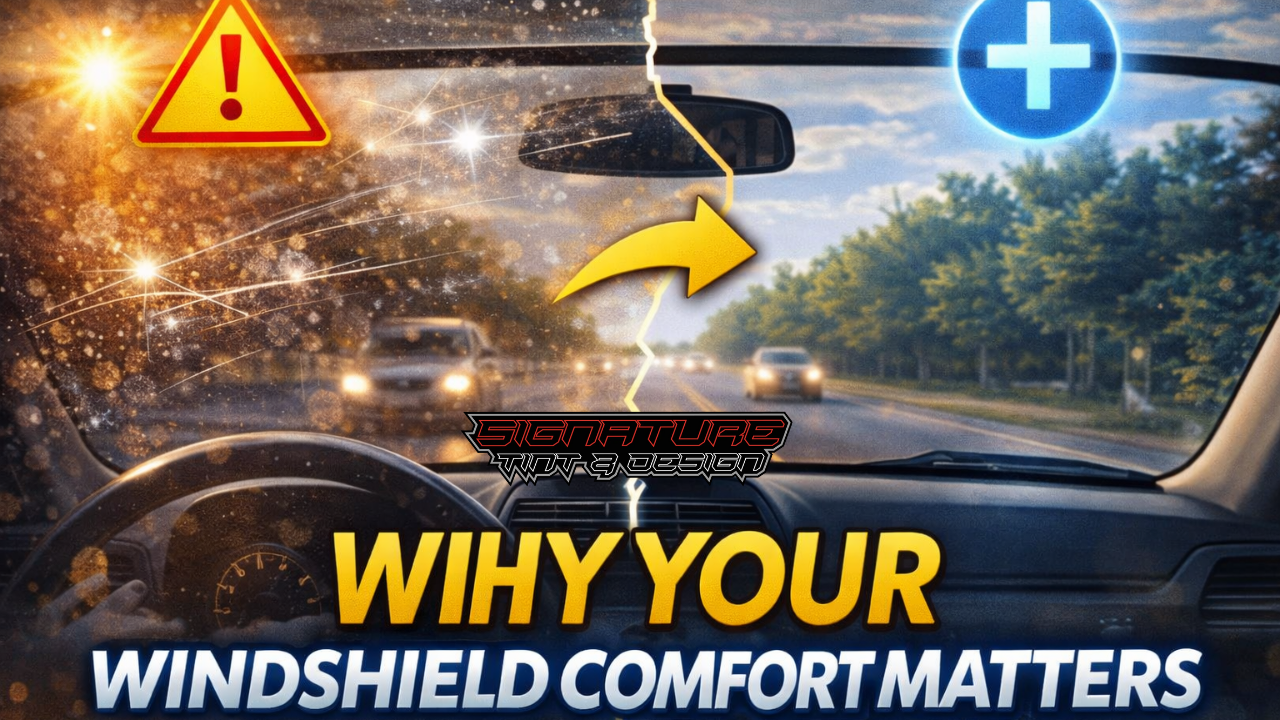
Even clear windshields allow massive amounts of infrared radiation into the cabin. If the windshield is untreated, heat continues to pour in, especially while parked.
AAA notes that direct sunlight through the windshield is a leading cause of interior temperature spikes.
Without heat-rejecting windshield protection, side window tint can only do so much.
4. Your Car Still Absorbs Heat From Other Surfaces
 Glass is not the only factor affecting interior temperature. Heat also builds up through:
- Dark paint colors
• Metal body panels
• Roof surfaces
• The dashboard itself
Once heat enters the cabin, it becomes trapped. Tint slows heat transfer but cannot instantly cool materials that have already absorbed energy.
NASA explains that heat retention occurs when surfaces absorb solar radiation and release it slowly over time.
This is why a parked car may still feel hot even after tinting.
5. Expectations vs Real-World Performance
Window tint improves comfort, reduces glare, and protects interiors. It does not turn a parked car into a climate-controlled space. The biggest benefits are felt while driving and during longer periods of sun exposure.
Signs your tint is working include:
- Reduced glare while driving
• Slower interior heat buildup
• Less dashboard fading
• Improved air conditioning efficiency
Frequently Asked Questions
- Should my car feel completely cool after tinting
No. Tint reduces heat gain but does not eliminate it entirely. - Does darker tint block more heat
Not always. Darkness affects glare, not infrared heat rejection. - Why does my car cool faster once I start driving
Tint helps prevent new heat from entering, allowing air conditioning to work more efficiently. - Is windshield tint important for heat reduction
Yes. The windshield is the largest source of solar heat entry.
Understanding Tint Helps You Get the Most From It
Window tint is a powerful tool when you understand what it does and what it does not do. Knowing the difference between heat, UV, and glare helps set realistic expectations and ensures you choose the right solution for your vehicle.
If you have questions about how your tint is performing, the team at Signature Tint & Design in Palm Desert is always happy to help explain your options.
📍 Visit Signature Tint & Design in Palm Desert
📞 Call 760-578-6902
🌐 https://signaturetintdesign.com