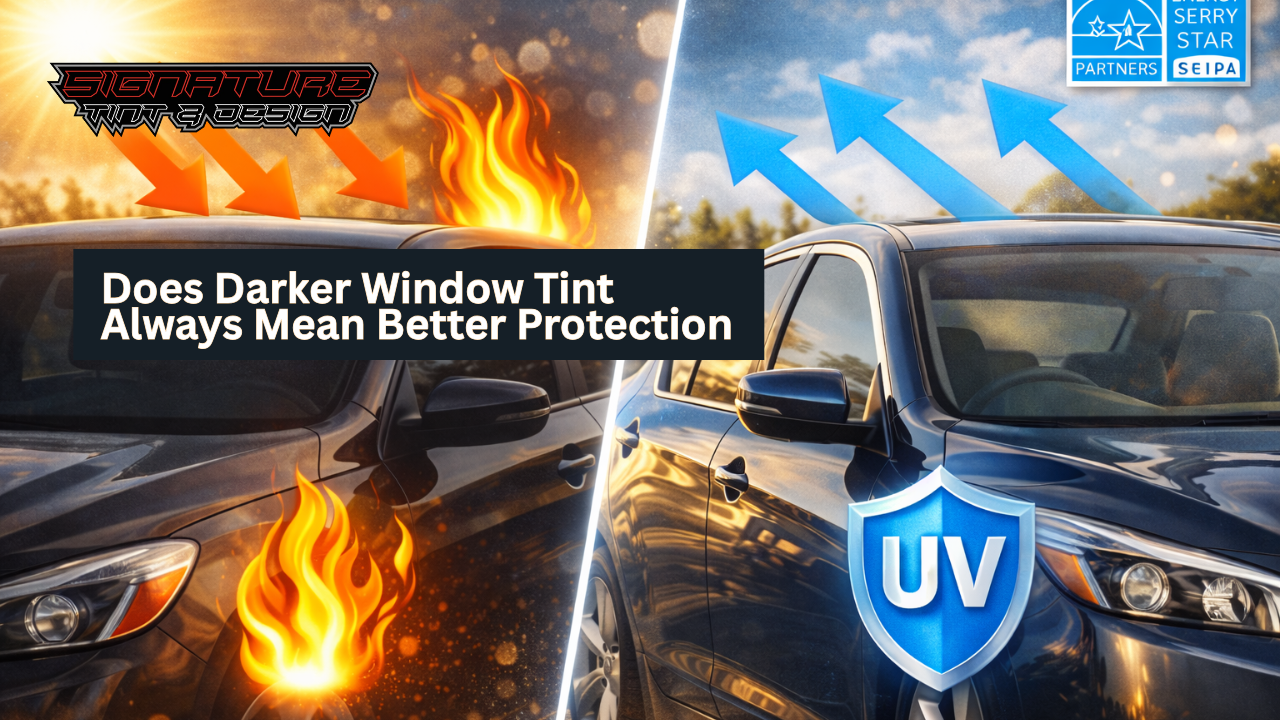
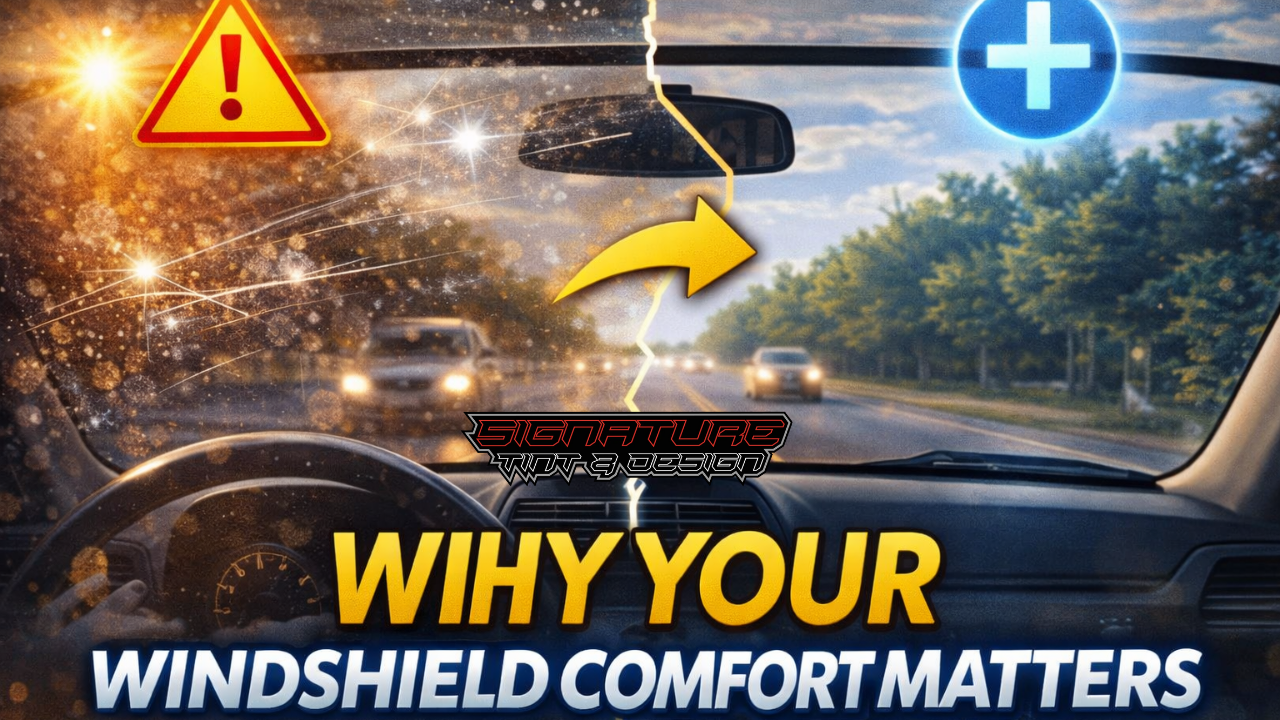
Many drivers assume darker window tint automatically equals better protection. It feels logical. Darker windows block more light, so they must block more heat and UV as well. But when it comes to window tint, appearance alone does not tell the full story.
Window tint performance depends on technology, not just shade. Understanding how tint actually works helps drivers choose protection based on results rather than assumptions.
Darkness Reduces Glare, Not UV Damage
Tint darkness refers to visible light transmission, which controls how much light enters the vehicle. Darker tint reduces brightness and glare, improving comfort while driving. However, glare reduction and UV protection are two different functions.
High-quality window films can block up to 99 percent of ultraviolet rays regardless of how light or dark they appear. This means a lighter tint can protect your skin, dashboard, and upholstery just as effectively as a darker one.
According to the U.S. Environmental Protection Agency, UV radiation remains present even when visible light is reduced.
Heat Comes From Infrared Radiation
The heat you feel inside your vehicle comes primarily from infrared radiation, not visible light. This is where many drivers get confused.
Some darker films reduce brightness but allow infrared heat to pass through the glass. More advanced films are engineered to reject infrared energy directly, which significantly improves cabin comfort.
The International Window Film Association explains that infrared rejection is one of the biggest performance differences between tint technologies.
Why Lighter Tint Can Outperform Dark Tint
Modern ceramic and carbon window films are designed to reject heat efficiently without relying on darkness alone. These films maintain clarity while providing strong thermal protection.
Benefits of lighter high-performance tint include:
-
Better nighttime visibility
-
Reduced eye strain
-
Strong UV and heat rejection
-
Improved safety in low-light conditions
The U.S. Department of Energy notes that solar control technology focuses on managing heat transfer rather than visible darkness.
Legal Limits and Visibility Matter
Darker tint is not always legal. Tint laws regulate how much light must pass through vehicle windows, and exceeding those limits can result in fines or required removal.
Beyond legality, extremely dark tint can reduce visibility at night, increasing eye fatigue and reaction time. AAA emphasizes that clear visibility plays a key role in driving safety.
What Actually Determines Tint Performance
True window tint performance depends on several factors:
-
Film technology
-
Infrared heat rejection
-
UV blocking capability
-
Installation quality
-
Coverage, including the windshield
 Darkness alone is only one small part of the equation.
Frequently Asked Questions
Does darker tint block more heat
Not always. Heat rejection depends on infrared performance, not how dark the film looks.
Can light tint still protect my interior
Yes. High-quality films block UV rays effectively even at lighter shades.
Is darker tint safer for driving
Not necessarily. Darker tint can reduce nighttime visibility, while lighter high-performance films often provide a better balance.
Why does my car still feel hot with dark tint
If the film does not reject infrared heat, darkness alone will not prevent heat buildup.
Choose Tint Based on Performance, Not Appearance
Window tint works best when chosen for how it performs, not how dark it looks. Understanding the difference between glare reduction, UV protection, and heat rejection helps drivers make smarter long-term decisions.
If you have questions about choosing the right tint for your vehicle, the team at Signature Tint & Design in Palm Desert is always available to help explain your options.
📍 Visit Signature Tint & Design in Palm Desert
📞 760-578-6902
🌐 https://signaturetintdesign.com